Commercial Insurance

Drone Insurance for South African RPAS Operators

Under Part 101 of the Civil Aviation Regulations, every commercial drone operator must hold third-party liability insurance before a Remote Operator Certificate will be issued. Standard liability policies exclude aircraft, and drones are classified as aircraft. Specialist drone cover fills the gap, and it covers more than just the liability.

FSP No. 5671Independent since 1980SACAA-compliant placement
Part 101
SACAA regulation requiring mandatory third-party liability insurance for all commercial drone operators. Proof of cover must accompany the ROC application.
R4m
Maximum hull and payload cover available for commercial RPAS operators, covering aircraft up to 86kg. Based on full replacement value, not depreciated value.
3
Licence documents required for cover: Remote Pilot Licence (RPL), UAV Certificate of Registration (CoR), and Remote Operator Certificate (ROC).
Underwriters we work with
iTOO / HollardSantam AviationAIG South Africa
The gap in standard cover

Your general liability policy almost certainly excludes drones

Commercial general liability policies routinely exclude damage or injury caused by aircraft. Drones are legally classified as aircraft under the Civil Aviation Act. That means most standard liability policies provide no cover when a drone is involved, and most business owners do not know this until a claim is declined.

A drone that strikes a person, falls onto a vehicle, or damages property during a commercial operation will trigger an aircraft-related claim. Without specialist drone insurance in place, the operator carries that liability personally.

Drone insurance is not just a regulatory requirement for commercial operators. It is the only policy class designed to respond correctly to the actual risk profile of RPAS operations: the aircraft itself, the payload it carries, the people on the ground below it, and the data and equipment lost if something goes wrong.

Commercial operators applying for a Remote Operator Certificate from SACAA must submit proof of third-party liability insurance as part of the application. Without it, no ROC is issued, and no commercial operations can legally take place.

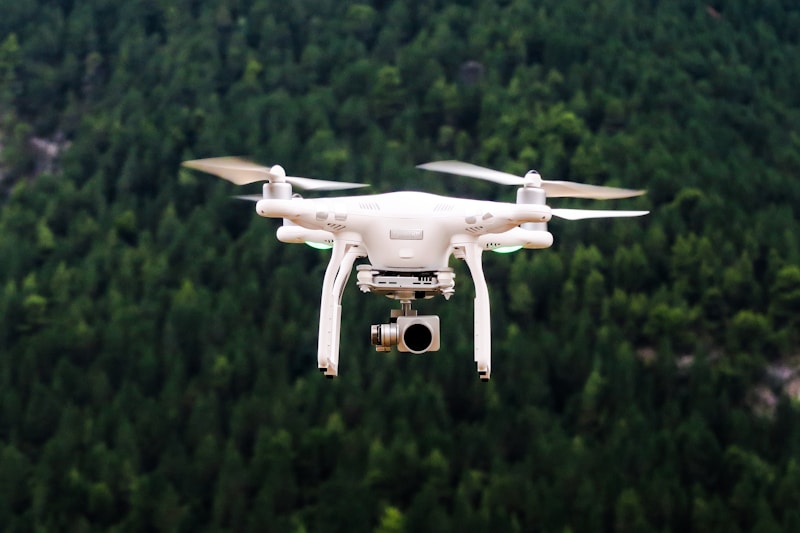
Commercial drone in flight - illustrating the need for specialist drone insurance in South Africa
Part 101SACAA-mandatory
insurance
SACAA | Part 101

What the regulations require before you fly commercially

The South African Civil Aviation Authority regulates all remotely piloted aircraft systems under Part 101 of the Civil Aviation Regulations. Commercial operations require a layered set of licences and certifications, and insurance is a mandatory component of the ROC application, not an optional add-on.

Non-commercial hobbyist operators flying drones under 7kg in non-controlled airspace are exempt from the ROC and RPL requirements but remain subject to general operating rules. Once any commercial purpose is involved (photography, surveying, inspection, agriculture, security) the full commercial framework applies.

Important: Your standard commercial general liability policy contains an aircraft exclusion. Flying commercially without specialist drone insurance means flying without any third-party cover at all, not just insufficient cover.

01

Remote Pilot Licence (RPL)

Each individual pilot must hold an RPL from SACAA. Requires theoretical examination, practical competency assessment, and medical fitness certification.

02

UAV Certificate of Registration (CoR)

Each drone must be registered with SACAA individually. The CoR ties the specific aircraft to the operator and is required before the aircraft may fly commercially.

03

Remote Operator Certificate (ROC)

The company-level certificate authorising commercial RPAS operations. Requires proof of third-party liability insurance, operations manuals, and demonstration of safety management systems.

04

Third-party liability insurance (mandatory)

Proof of insurance must be submitted with the ROC application. It must be in force at all times during commercial operations. The policy must cover the specific aircraft types and operational categories declared in the ROC.

Cover

What drone insurance covers

A comprehensive commercial drone policy provides three categories of protection. Most operators focus only on liability, but hull and payload cover are equally important for businesses that depend on expensive equipment.

The mandatory component for commercial operations. Covers your legal liability for:

  • Accidental bodily injury or death caused to a third party
  • Accidental damage to property belonging to a third party
  • Damage to goods or products being carried by the drone
  • Damage to another operator's drone while in your care, custody, or control

Physical damage to the drone itself, whether in flight or on the ground. Covers:

  • Accidental loss of or damage to the drone airframe
  • Detachable payloads including cameras and lenses while in flight
  • Disappearance, aerial hijacking, or confiscation
  • Theft in transit and in storage

The equipment mounted on the drone, typically the most expensive component of a commercial operation. Covers:

  • Specialist cameras, multispectral sensors, LiDAR, and thermal imaging equipment
  • Accidental damage to spares and replacement components
  • Theft and damage to payload equipment in transit
  • Payouts based on full replacement value, not depreciated value

Cover limit: Commercial drone cover is available up to R4 million for hull, payload, and spares combined, for aircraft weighing up to 86kg. Payouts are calculated on full replacement value. The policy must be in force before the ROC application can be submitted.

The exclusion problem

Why your existing policies won't respond to a drone incident

Most commercial operators assume their existing insurance programme provides some cover for drone operations. In practice, the aircraft exclusion closes nearly every door. Here is what each policy class does (and does not) cover.

Excludes aircraft

Commercial general liability

Standard CGL policies contain an aircraft exclusion. Drones are classified as aircraft under the Civil Aviation Act. A drone incident triggers the exclusion and the claim is declined.

Does not cover

Commercial property insurance

Commercial property cover applies to fixed assets at insured premises. A drone in flight, in transit, or on a remote job site is outside the scope of a standard commercial property policy.

Partial only

All-risk equipment cover

Some all-risk policies may cover the drone as a piece of equipment when grounded. In-flight damage and third-party liability arising from flight operations are typically excluded.

Partial only

Professional indemnity

PI covers professional negligence claims relating to the services delivered. It does not cover physical injury or property damage caused by the drone itself during flight operations.

Does not cover

Homeowner or personal contents

Recreational and personal policies explicitly exclude commercial use. A drone used for any commercial purpose (even occasional paid photography) falls outside personal cover.

Covers drones

Specialist drone insurance

The only policy designed for RPAS operations: liability, hull, payload, and spares in a single policy. SACAA-compliant, ROC-ready, and covers both flight and ground operations.

Who needs it

The commercial sectors flying drones in South Africa

Any operator flying for commercial purposes under Part 101 requires drone insurance. These are the sectors where drone operations are most active, and where the liability and equipment exposure is highest.

Agriculture

Crop monitoring, multispectral NDVI analysis, and precision spraying. High-value sensors and frequent operations over occupied farmland create both equipment and liability exposure.

Surveying and mapping

Photogrammetry, 3D modelling, topographic surveys, and orthomosaics. LiDAR and photogrammetry payloads are expensive and the work is typically conducted over active sites and infrastructure.

Aerial photography and film

Real estate, events, advertising, and film production. Operations near people and property in urban and peri-urban environments. High camera values and frequent public exposure.

Infrastructure inspection

Power lines, pipelines, cell towers, bridges, and rooftops. Work is conducted near or over critical infrastructure and often at height, with significant third-party property exposure.

Construction and mining

Site progress monitoring, volumetric surveys for stockpile management, and safety inspections of areas unsafe for personnel to enter. Active sites with heavy machinery and workers present significant incident risk.

Security and surveillance

Perimeter monitoring, event security, and anti-poaching operations. Fixed-wing drones used for extended patrol coverage. Operations often near people and in sensitive locations requiring careful liability management.

Why broker matters

Drone insurance requires specialist placement

The market for commercial drone cover in South Africa is small and the underwriting is specific. Policy wordings vary on flight radius, payload cover, operational categories, and geographic scope. Getting the wrong policy accepted for an ROC application is a compliance risk, not just an insurance risk.

ROC-compliant documentation

We issue certificates and policy schedules in the format SACAA requires for ROC applications. Your insurer documentation is ready to submit.

Correct operational scope

Cover must match your declared operations: aircraft types, weight categories, operational radius, payload types, and geographic areas. We structure the policy against your actual ROC scope, not a generic one.

Fleet and multi-aircraft policies

Operators running multiple aircraft benefit from fleet-rated policies rather than insuring each drone individually. We structure cover across your aircraft inventory with a single policy.

Annual renewal management

SACAA requires current insurance at all times. We manage the renewal cycle so your ROC never lapses due to an expired policy, and we review your cover as your aircraft inventory and operations evolve.

FAQs

Common questions about drone insurance

For commercial operators, yes. Part 101 of the Civil Aviation Regulations requires that all operators conducting commercial RPAS operations hold third-party liability insurance, and proof of that insurance must be submitted as part of the Remote Operator Certificate application. Operating commercially without a valid ROC is an offence under the Civil Aviation Act. For recreational operators flying drones under 7kg in non-controlled airspace, insurance is not legally required but remains strongly advisable.

Almost certainly not. Commercial general liability policies contain an aircraft exclusion clause, and drones are legally classified as aircraft under South African law. This means a drone incident will trigger the exclusion and the liability claim will be declined. SACAA also requires specialist aviation liability insurance for the ROC application, not a standard CGL policy.

To place commercial drone insurance, underwriters require: the completed proposal form; the Remote Pilot Licence (RPL) for each pilot; the UAV Certificate of Registration (CoR) for each aircraft; the Remote Operator Certificate (ROC) or the ROC application in progress; declared fee income from commercial operations; and claims history if any.

In most commercial drone policies, hull and payload are both included within the same policy but declared and valued separately. Both can be insured up to a combined limit of R4 million for aircraft under 86kg. Payouts are made on full replacement value. Specialist sensors and cameras should be itemised accurately at policy inception to avoid underinsurance at claim stage.

Cover can be extended to other countries, subject to underwriter approval. Each country has its own RPAS regulatory framework, and some require locally admitted insurance. If you operate across borders (for example in Namibia, Botswana, Mozambique, or Zambia) discuss the geographic scope with your broker at placement. Cover in place for SA operations alone will not respond to incidents elsewhere.

Yes. Commercial operators running multiple aircraft can arrange a fleet policy covering all declared aircraft under a single policy schedule. Each aircraft must still be individually listed with its UAV CoR number, weight, and insured value. Fleet policies are typically more cost-effective and simplify the renewal and documentation process for ROC maintenance.

Get your drone operations properly covered

Whether you are applying for a new ROC, renewing an existing policy, or adding aircraft to your fleet, we handle the placement and the documentation. Get in touch and we will structure the right cover for your operations.